Showing posts with label Running. Show all posts

Saturday, August 7, 2010

Why I Became a RAW 80-10-10 VEGAN - FRUGAN?

[caption id="attachment_61" align="aligncenter" width="263"] Who says Living Frugan is Boring?[/caption]

So many people ask me about my diet, I’d like to write a concise article describing the “what and why” of my diet.

Since this is intended as a brief explanation, I won’t include references or in-depth scientific information. Both are available in the resources listed at the bottom, all of which come highly recommended.

I eat a high carbohydrate, low fat raw vegan diet, best described in the book The 80/10/10 Diet by Dr. Douglas Graham. That means: whole, fresh, ripe, raw, preferably organic fruits, greens and veggies.

I get most of my calories from fruit, since edible, raw vegetables are so low in calories that it would be impossible to build a sufficient diet around them, and grains and legumes are totally unappealing in their whole, unprocessed state.

Some typical food days for me might be:

¼ - 1/3 of a large watermelon for breakfast,
12 bananas and 2-4 mangoes for lunch

Mid afternoon or evening meal: 1-2 large Red Delicious apples, 1-2 heads of romaine lettuce, ½ lb fresh spinach, 2 celery stalks, ½ cup shredded cabbage, 1-2 large carrots, ½ cucumber, 1 bell pepper or 6-8 sweet peppers

On days when I am running 15-30 miles 20-30 fresh dates and 3-6 more bananas or bite sized chunks of watermelon, mangoes, peaches in sandwich sized Ziplock bags are the norm.

I usually aim for 2500-4000 calories a day depending on how far I am running that day.

I used to use a free program called Cronometer to track my calorie and nutrient intake to get a feel for how many calories I was consuming.

I grew up on S.A.D. (Standard American diet) including meat, dairy, eggs, breads, fruit and vegetables. (Even though most of it was grown either in our yard or on a local free ranged farm.

I developed appendicitis at age 13. During surgical removal of it they found a piece of rotting BBQ beef inside it! Knowledge of this is what was the trigger for me to begin questioning what really was a human appropriate diet. No animal in nature is supposed to die from eating it's symbiotically compatible foods.

I came to learn that a Vegan diet was closer to what we are designed to run on and transitioned pronto. It was in this season of life that I was discovered by a local Bicycle Race Team and invited to become a part of the regional racing community.

Before my appendectomy I was always super ripped with a very defined “6 pack” and afterwards I saw that no matter how active I was, I held onto more body fat especially in the abs than I was used too. As a Vegan relying mainly on vegetables and some fruit, I did bring the fat ratio down but mostly in my legs. I had chronic cravings, I was too low in body fat everywhere except my abs and would resort to raw nuts for more calories and that meant consuming a high percent of my caloric needs as nut - fats to try to satiate my cravings.

For economic reasons and availability - scarcity, I had to break my Vegan streak by going back to cheese, yogurts, eggs and some wheat (even though I knew wheat inflamed my digestive tract like nothing else!)

Over the years I kept exploring various versions of raw vegan diets. When I came upon Internet blogs and sites speaking about the RAW Fruitarian way of eating, I dismissively assumed that it was for spaced-out hippies and a video I saw by a raw food ‘guru’ confirmed this suspicion. However, I began to come across Ultra Marathon Runners who were performing at levels non Vegans dream about and "greenie Vegans don't want to talk about. All of these "Frugans" were in the 4-6% body fat range and seemed both motivated to put in potent work outs and seemed more centered and calm. All this spoke to so kind of Innate Truth in me that powered up my interested in trying a Frugan diet.

I had tried the typical, “Hollywood raw”/gourmet raw diet, which is very high in fat (as much 60-80% calories from fat, compared to the already high-fat SAD around 25-30%), and includes ingredients like vinegar, oil, salt, spices, garlic, onions, so called "superfoods", and supplements. All of which I now know create cravings, imbalances, and over eating. I was unable to stay on the "Vegan" diet because I was constantly hungry and craving cooked foods.

Most “raw Vegan” restaurants serve the above kind of high fat, high protein low carbohydrate combinations.

After a while in the raw vegan community, I heard about an out spoken character called the Durianrider (real name Harley Johnstone). I watched one of his youtube videos and he immediately had my attention. He was talking about meat-eating and cooking foods, as well as the typical, high-fat, gourmet raw diet. He suggested instead a simple, fruit based diet called the 80/10/10 Diet. I was impressed by his athleticism, his passionate, bold approach.

His wife, Freelee Love had beat out Bulimia and Candida and they were both beautiful examples of health and vitality. He mentioned getting a copy of the 80-10-10 diet book and I was still hesitant. Then through his Friend List on Facebook I connected with Victoria Arnstein and her husband Michael who both also exemplified what eating “811” could do. I managed to get hold of Scott Jerek, one of the top Ultra Runners in the USA who is also a Frugan, he too suggested I get a copy of Douglas Graham's book too....Got it.... Couldn't put it down!

This book helped me see what I had done wrong in my prior attempts to find the most natural and functional way to fuel my body.

Within days of beginning to implement a diet of primarily fresh, ripe, raw fruits, greens and veggies, all raw, I experienced the inflammation in my guts dissipating, my cravings diminished, especially for salt, crunchy nacho chips. My desire for anything animal sourced began to disappear. My mind suddenly retained longer chains of numbers and information for later retrieval.

I experienced a few weeks of noticeable “cleansing” where I had periods of the day where I felt a bit sluggish. In moving to a more potent, alive diet I expected my body to do some deeper "house cleaning" since I no longer loaded up my digestive system with "Broken Foods.".

A partial list of some benefits I’m experiencing:

· I lost 30 lbs in just 30 days with no change in volume of running. The fat on my abs and obliques melted away.
· Greater muscle definition and vascularity
· My skin quality improved noticeably. I tan darker, faster and more evenly. Melanin: the substance our body's uses for pigment production is thrown out of balance by eating animal products (which contain the melanin that the animal was using). Once we stop consuming other animals hormones and other compounds that are too close to our own our body's confusion over how much of any given needed element in our blood stream ends and allows the cells and systems to more accurately communicate between themselves to more adequately deal with what ever it is that needs to get done.
· Instead of the Uric
Acid unpleasant odor common to cooked foodist I now have a much more pleasant and subtle body aroma
·

My body fat ratio settled to a more natural
· 5-7% body fat without having to “diet”
·

Food prep is no more complicated than peeling a banana, slicing a mango or tossing a salad (No more need to wash cook ware or other big messes!)
· I enjoy my food more with no concern about getting fat or becoming tired I am after a delicious meal.
· I know now when I’m hungry, and I only eat when I’m hungry. I have no impulse to eat for amusement, or emotional comfort any more. This leaves me much freer to focus on getting things done, running, and relationships, things that really matter to me.
· My diet doesn’t contribute to the white washed cruelty and killing of other animals. (I recommend reading Animal Liberation by Peter Singer for a very compelling argument in favor of equal consideration for non-human animals’ needs)
· By eating food grown in trees, we encourage the reforestation of the planet, which is vital to combat climate change and desertification.
· By eating fruit, we dramatically decrease water consumption in food production and even for personal consumption like from bottled or filtered water by several factors of ten compared to eating meat.
· I wake up feeling energized and happy.
· My breath always smells good, even right when I wake up.
·

The Gout that was forming in my left foot – toes is 80% gone and continues to abate week by week as my body becomes more alkaline and replaces less than optimal tissues now that it has what it actually has always needed.
· Bowl movements take moments instead of half the morning and no longer stink up to bathroom. No more gas either!
· The quiet and peace I feel in my body whether I am at full throttle out running or sitting on the couch at my home with my family.
· I no longer waste money and health on "excito-toxins," fractionated and broken foods or stimulants like vinegar, oil, spices, so called super foods, or supplements.
· I no longer "induce a fever" into my foods. A significant amount of energy is consumed in America from household cooking.

I’m more excited about this way of fueling than any one else in my household but the results have some of my family reading The 80-10-10 Diet book and researching it online! It’s certainly subversive but I’m not at all the only person doing this.

At an online community called 30 Bananas A Day , there are thousands of people interested in this lifestyle, including World Class Ultra Marathon Runners, Cyclists, Weightlifters, Cross Fitters and Body Builders, Rock Climbers, Speed Skaters, Gymnast, and many other athletes. There are several other LFRV (low-fat raw vegan) online communities that have sprung up in the last year as well.

Now is the time for you to experience greater health than you have imagined possible!

Go bananas and eat some fruit!

If you’re interested in learning more about this diet, or vegan diets in general, check out these books and websites:

The 80/10/10 Diet by Dr. Douglas Graham http://foodnsport.com – Doug Graham’s website, full of great articles

The Fruitarian – website of Michael Arnstein, incredible Marathon and Ultra Marathon Runner http://www.thefruitarian.com

Diet For a New America and Food Revolution by John Robbins http://www.foodrevolution.org/market/products1.htm

30 Bananas A Day – my online LFRV community of choice. Great people, great info, great support. http://www.30bananasaday.com

Raw Natural Hygiene – another great online forum http://rawnaturalhygiene.ning.com

The McDougall Program by Dr. John McDougall http://www.drmcdougall.com

The China Study by T. Colin Campbell http://www.thechinastudy.com

Animal Liberation by Peter Singer http://en.wikipedia.org/wiki/Peter_Singer

Charlie Abel – raw vegan bodybuilder http://www.veganbodybuilding.com/phpBB2/viewtopic.php?f=35&t=14053

https://www.facebook.com/LandSurfingFrugan

Erskien Lenier

Wednesday, March 31, 2010

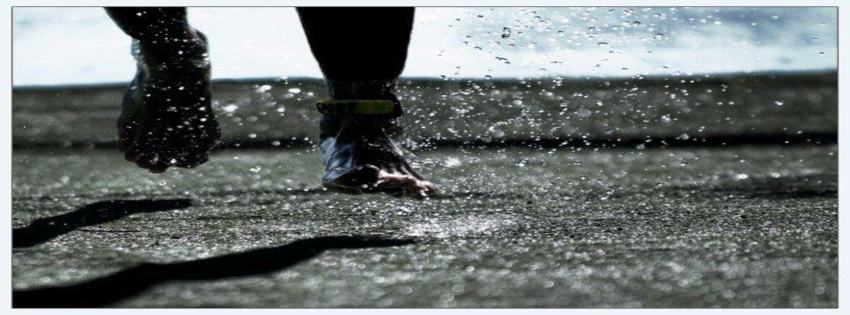
Why and How I Became a Barefoot Runner?


I came from the sport of Bicycle Road Racing at the International level.

In that season I logged over 750,000 mile of racing and training.

Because of those decades of being bent over my bikes handlebars my body optimized itself for being in that position and not being a “Bi-ped” or person designed for moving gracefully or efficiently across the land. (I mention this because most of you did not grow up running as a natural and daily part of your lives. Most people grow up wearing shoes and moving from chair to chair especially as the decades pile on).

I came to a season 3 years ago where I transitioned to running from cycling and I quickly learned that my feet were so atrophied from being encased in carbon fiber soled shoes the right one had gout and many of it's bones were fusing due to calcification and the left one had no stability at all.

From coping with decades of seasonal crashes and being in a leaning forward position for so many miles my pelvis tilted unnaturally forward at the top and my gluteus and quads were very over developed.

Most short races or criteriums are run in a counter clockwise direction around courses that are less than a mile in diameter for up to 40 miles. These are very high speed races with lots of anaerobic level sprinting in tight packs where elbowing for room to pass with riders all across the road pursing cash prizes for being the first person across the line on any given lap where the winnings can be anything from $25 to $1,200 lots of crashes due to landing on the same side so many times my body had compensated by twisting my pelvis counter clockwise when viewed from above resulting in a timing difference for the nerves firing in my right leg faster than my left creating a timing difference when applying power over the top of the pedal stroke. This added in the wonderful effect up the biomechanical chain of creating a scoliosis spine, a dropped right shoulder and my head literally being a whole inch off centered on my shoulders to the left due to the scoliosis.

Why did I bother to illustrate this?

Because 3 yrs ago after a brand new "Star Wars" grade $10,000 carbon fiber "Wonder Bike" I was breaking in on by taking it down a small mountain grade at 61 mph decided to disintegrate with zero warning (frame exploded out of no where!) leaving me on the asphalt with significant road rash I felt like Forest Gump once he had run back and forth across the USA enough times he just stopped and knew it was time to go home. I knew that I had turned my last pedal. A nice couple in a Honda CRV was kind enough to stop as they witnessed the whole thing happen and they offered the pieces and myself a ride home.

I got a full refund from the manufacturer of that rig and after a week or so of my burns healing I began to get the itch for sweat, lungs full of outdoor air and bumping up against my max heart rate.

A few days later I woke up with the distinct impression I was to go buy a pair of running shoes.... and run again.... Something I had not done since back in my late teens to early 20's in the mid 1970's.

Never the less I immediately loved sweat, breathing deeply and feeling myself moving across the land under my own power again. That quickly evolved into dreams of being able to run as far as I used to be comfortable riding a bike in a day (25-160 miles at a clip was normal) I figured if my engine (heart and lungs) was more than adequate for it all I had to do was get my feet and legs up to that level of adaptedness.
Within a coupe to 3 wks I was running 12-17 miles per day but dealing with chronic knee pain, shin splints, blisters, blue toe nails, foot fungus, back and hip pain, ankle and toe joint pains to name just a few parts that I hobbled home with.

Oh, and my wife who occasionally went out running with me for part of those miles told me I didn't run upright. She said my posture was like an Ape! Hunched over and loping instead of being vertical and graceful. I was both embarrassed and knew something was very wrong but I'd figure it out if I kept stressing my body and allowing it to adapt before going back out to lay up the next layer of adaptation stressing.

Well over a few months of realizing I was also on the hook for replacing $130 shoes every 21-28 days due to my heavy heel striking style which caused the heels to be shot in that little mileage (about 280-325 miles per month) I hated that. After my bike broke I and I took to running one the things I realized I had done over the decades is wasted 100's of 1000's of dollars on bikes and all the gear needed to ride and support them and wished I had all that back and in the bank. I couldn't help but think that being fit should not be a financial drain of any kind.

As my knees and shins got worse I began to research on the internet how others had coped with this stage and gotten to where they now ran at least a marathon or 2 per month or how the 100+ milers (Ultra Runners) seem to do 1-2 of those per month, month after month relatively injury free.

This lead to my meeting a fella out of Huntington Beach called Ken Bob Saxton over the Internet who ran a marathon or 2 a month Barefoot! Ken Bob has his own site dedicated to Barefoot Running at

As we exchanged message through post on his website I eventually got him to agree to a phone call. On that call after sharing my laundry list of symptoms he explained to me that we were never designed to wear modern day running shoes as their design actually had no relevance to how our biomechanics were designed to function. Meaning most people whether walking or running have been "Retrained" to land on their heels when in nature no Native or Natural tribes land on their heels. Instead they land on the balls or the pads of the "mid foot" so that the cantilevered structure of the arch is activated as a natural "leaf spring" not unlike what is found underneath the back axle of most pick up trucks for both suspension, shock absorption and load carrying capacity if you care to get down on your belly and look up under one if you've never done so.

Landing on the heels not only by passes this natural beginning to optimal loading of your weight during the "walking or running gait or movement" It encourages us to over or hyper extend the knee by over activating the "hip flexors" in effect straightening out the upper and lower legs bones to make the knee joints into nothing more than a non cushioning biscuit to be smashed on every heel strike while the shoe makers tell us they have put adequate "Super Duper Star Wars" form and other dinosaur juice based technology into the heel areas to protect us from the "pounding of the pavement" (actually our ignorance and stupidity) This behavior and programming (as it is a form of hypnosis since the soles of our feet were designed to supply us with feed back so that we would constantly adjust our stride, gait, sole firmness, angle of sole contact, feel for the need to lighten the loading of the foot if something potentially injurious were under it and to be more conscious and intentional about where we place our feet or step for more certain and safer footing)

I knew a ton about the biomechanics of Cycling and optimizing ones position on a bike comfortable and relatively injury free mega mileage with very high speed capacity. I had never thought of running in regards to actual biomechanics, efficiency, gait break down and optimization of fluidity during the movement of shifting ones weight from one side of the body to the other at higher and higher speeds.

Ken Bob Saxton in all his simple wisdom shared with me a single sentence that forever changed how I looked at running.

He said, "Barefoot Running FORCES CORRECT BIOMECHANICS." Within seconds of hearing that statement it hit me like a ton of bricks why all those years of paying for Chiropractic treatments, working out at the gym, seeing various doctors about foot, leg, hip, back and neck pains was a huge waste of time and money and why not even the Chiropractor could give me a viable or straight answer as to why they could "crack me" back into correct alignment but could not teach me one thing I could do on my own to retrain my body to stay stacked up properly so I didn't need them or the MD's dumb ass suggestions of replacing knee joints, or the nutritionist suggestions of taking supplements to support the joints and such. Totally bogus paths to permanent and sustainable health for the rest of my life!

No needless to say within a couple of days of pondering this totally out of left field idea of heading out the door without my "Foot Condoms" I woke bolt up in bed at 130am one night with the distinct impression I was to go out for night time run of perhaps 10-12 miles as the pain in my knees and shins was down to "tolerable". So I got dressed and slipped on my Camel Bak on to have a place for my keys and bit of water and headed out the door. I didn’t get 10 feet down the sidewalk approaching where it curved around the end of my garage when I heard as if there was someone on the roof of my garage, “Lose the Shoes!” I spun around triggering the motion detection lights on the front of our garage and looked up. No one there! I thought, “I must not be fully awake and am having an awake dream bleeding through out here!” Pondered that for another second and went to set into a running gallop only to hear it just as loud again! I spun around looking towards the house expecting to see someone who would bust out laughing after having successfully pulled a very funny prank on old serious Erskien! Nothing! No one! At this point I look to the sky and state, “Is that you Lord?” Knowing full well in my soul I prayed for more guidance on navigating and mastering the mind field running had unveiled that I was taking more hits than I thought I could endure through.

So in a split second I felt confirmed that this nonsensical suggestion was of Divine Origin and I knew that so many forks in the roads of my life where I thought that direction was not logical had in fact turned into blessings in disguise. I took my Asics Star Wars shoes off with their Super Duper Super Feet orthotics and stuffed them into the outer pockets of my Camel Bak as I didn’t know how far I could go without them or if I’d reach a point where I’d had enough barefooting but still want to go more miles.

So off I went….

It took me all of about 50 ft on the cool smooth concrete sidewalks to find myself feeling “Giddy” (That joyous feeling that makes a plan face develop a smile for no definable reason other than the feeling to smile just flood upward out of the soul like a well that just became a geyser of pure fresh cold water!)

Suddenly I was so happy I literally did just begin smiling and could feel it and KNEW beyond a shadow of a doubt that the end of my “Valley of the Shadows” journey through what seemed link endless and deepening pain was coming to a close! Adding to the joy was the realization and confirmation that God had heard my prayers and actually waited for me to become humbled enough to ask for “His WILL for my Life” over my own (how to run in shoes or according to mans way over what he built this “Space Suit” called a body to do by NATURE.

Nonetheless, that day began my Barefoot Running Adventure into a realm of Running that is invisible to those who only know it through the filter called shoes. I’ve logged over 6800 miles in the last 3 yrs or so and I can tell you there were many miles and months of discomfort, aches, pains and bruises to endure but not one moment did I ponder going back to shoes or riding my bike. I knew beyond a shadow of a doubt that this was a Divinely Inspired Path for me and that my traveling this path would become a liberating and healing path for literally millions of others to discover the most obvious yet hidden door to healthy mobility, fitness, inspiration and sanity built right into the very fabric of life there is.

I did reach a point where my soles were so bruised from rocks and pebbles (the gritty kind that’s everywhere here in Southern California) that I realized I could not go back to my “jacked up back end squishy running mattress shoes” so I got a pair of Vibram Five Fingers(basically a soft rubber casting of the sole of your feet with a Lycra top and they have toes like gloves so your toes can spread out naturally. The soles are cut with “S” shaped lines to make them extremely flexible in all directions for a much closer to barefoot feeling but with enough rubber to mute some of the feed back normal to going pure Barefoot.

I have since found an much cheaper and simpler “Minimalist Sort of Shoe” called Huaraches made by Invisible Shoe owned and run by Steven Sashen of Colorado that I like a lot more than the Vibram’s as they are open, lighter, do not rub against the toe nails in the latter miles of long runs and as mentioned are much cheaper. I am most impressed with how much they mute out gravel and grit on top of concrete or hard packed trails yet give me plenty of feed back about pressure or loading of the foot parts, natural flexibility of the whole foot, quietness and how well they cling to the soles despite being held on by merely pieces of rope! I am finding that on days when speed is the priority the Huaraches are what I prefer. On days when just cruising miles and being more intimately involved in what and where I step are OK I go completely Barefoot. Due to the light weight of the Huaraches I am more likely to bring them along in my Camel Bak’s outer pocket for extreme surfaces, latter miles of a super long run or to be able to go into Barefoot Unfriendly businesses for resupplying during long runs.

If you have questions or would like any kind of consultation on what your dealing with or insights on some sticking point in your adaptation to Natural Running feel free to contact me through any means I’ve listed on my Facebook Profile. My prayers for you are that you discover what I have and it blesses you even more than it has me.

PS: I might also add that I have become inspired to plan a “Run Across America” to launch in the Spring of 2011. Not sure if it will be completely Barefoot or supplemented with such minimalist shoes as above depending on how my feet continue to adapt to more extreme terrains and surfaces. I’ve put all that in God’s hands as he has and is my Coach on the “Road of Life” anyways. J

Erskien Lenier.
https://www.facebook.com/LandSurfingFrugan

Saturday, January 30, 2010

The Most Common Questions I'm Asked About Barefoot Running

First concept to understand is to think of how hard a horse with horseshoes clops down on the pavement.

Then think about how graceful, silent and low impact a mountain lion or cougar would walk or run across the same terrain or pavement. Huge difference in shock or force put into the feet and the ground.

Like the horse and the big thick hooves and even more so if you add horse shoes, humans wearing shoes are muting a lot of "feedback" from their God designed soles on how much force one is putting into landing on the foot.

Those who chronically wear shoes become practically unaware as to what and how they are stepping on almost 100% of the time. Shoes mute out most if not all awareness of what part of the foot we land on, how effectively we distribute body weight on the foot for agility and safety, the amount of down force during foot landing, the stability of the landing and loading of the foot and ankle and even how to walk or run compared to how God designed bi-pedal the movement to happen.

An example of this is the fact that the injury rate has sky rocketed for both people who walk (everyone) and those who run with fancy running shoes.

Bunions, Gout and Arthritis don't exist in shoeless tribes all over the planet and the foot, ankle, shin, knee, hip and back injuries which are normal and common in shoe based running don't exist for those that have never relied on shoes or have "ran away from them" and allowed their feet to reteach them how the legs and feet were designed to land, load and lift off in a natural walking and running gait.

The first thing that happens when one takes off their shoes is they become conscious and intentional as to where the step and how we step.

In nature, notice the mountain lion does not walk or run staring at where each of his 4 feet will step next.

He or she can do that because God designed them and us to be able to read the terrain before we get to it out our peripheral vision and automatically tell the legs and feet how how navigate with precision and agility.

Another symptom of chronic overuse of shoes is our feet become over reactive to stimulus such as walking on common surfaces in our environment like dirt, rocky trails, sidewalks, streets and such.

This over-reactive tendency is no different than if you chose to wear a blind fold everyday for decades to avoid seeing sunlight (which makes about as much sense as wearing shoes to me now a days!) and then taking the blind fold off one sunny day thinking you could now go out into the sun and be functional.

Not a realistic scenario, but can be done over time as you force the "atrophy" out of the eyes by gradually exposing them to low light and limited time exposures or are willing to put on shades once your eyes have absorbed as much as they can for the day out and "allow" them to return to doing what God designed them to do.

The feet atrophy a lot from being in shoes chronically and require time and lots of miles of use on a variety of surfaces to restore their natural health. The rewards for choosing to take that journey go far beyond just having healthy feet!

The skin on the feet does not become hard and calloused nor become all cut up and gnarly as is commonly thought. Instead the soles becomes slightly thicker than it's anemic shoe-self allowed or encouraged. They tan and the soles become more durable and elastic, kind of like "Kevlar" in a police officers bullet proof vest.(Elastic, stretchy and pretty puncture resistant!)

When I do step on shards of glass, thorns and such the leg of that foot naturally without conscious thought in a micro second, reduces the amount of force I was about to load on that spot and the foot flexes and shifts its load to other parts of the sole.

The skin stretches and usually the object either does not even stick to the sole or it slightly sticks in the surface of the skin but does not pierce through to any nerves or blood supply.

The natural reflex is to use the the next step to brush that sole gently against the pavement or ground to brush whatever it was off and continue on without needing to stop or further analyze what it was. Of course also that alerts my eyes to be more on the look out for more hazards in the coming area to be even more intentional on stepping around any other things that could do the same thing. No pain, no wounds, just agilely dealing with it.

Regarding heat or cold:

The sole become acclimated to temps up to just about melting asphalt and as cold as slightly below freezing if you go out running as those temps move into your region.

You learn to increase your tempo or steps per minute across the ground or pavement in such conditions to give the soles time to cool or get warm while not in contact with the extreme temp surface.

For surfaces like melting sticky tar or long stretches of sub freezing pavement or path, snow or slush those are times to dawn some form of shoe or foot covering (Moccasins or Vibram Five Fingers http://www.vibramfivefinges.com) to protect the soles until you have passed the danger and can take them off again.

When I know I am likely to traverse such liabilities on my runs I bring along my Vibrams in the outer pockets of my Camel Bak Lobo Hydration pack for quick easy access and storage when not needed.

Shoes have their place...Just not every place!

One final insight that I have not mentioned that is very different for Chronic Shoe wearers vs Barefoot Runners is what is called "The Gait" or "Bio-Mechanics of How Walking or Running Occurs"

If a child is not allowed to go long enough barefoot during the stage of learning to stand, walk and run they develop and unnatural tendency to land on their heels instead of the ball of or "mid foot" as all Native Tribes of the planet and all children start out doing naturally.

There is no padding, fatty tissue or jointed bones that form levers like the knee to absorb shock on the boney knob that forms the heel.

So instead of teaching correct walking and running biomechanics (mans stupid way as usual) to fix the problem of bruised heels was to add padding and lifted heels to try to absorb the shock and shift the weight mechanically back to the front of the foot instead of just instructing the person to do so!

Because making, distributing and selling shoes became profitable shoes become a needed accessory to prevent bruising of the heel!

Shoes teach the occupant of the body "backwards use" of the muscles of the feet, ankles, legs and hips also!

No different than taking the body of your car and turning it around on the chassis and having the wheels that steer now at the back end of the car and removing the shock absorbers and put hard rubber tires like your tricycle as a kid had on it! Oh and while we are at it let's stuff your feet into long narrow drinking glasses and take away all the padding on your seats.

Now imagine going at a walking pace drive in this car. Probably tolerable but not that much fun. Now try driving it at freeway speeds or even God forbid Racing it!

Imagine how that would change your feeling of being agile, in control and amount of shock you would experience. You would be endlessly looking for ways to get make the ride softer and more control able! Doesn't that sound like modern shoes and modern running shoes?

Ever notice that shoes are never shaped like feet especially the front of the foot? Show me a baby's foot that is shaped like a triangle! Or even a "U"!

The "Carnage" begins at Toddler Age when we begin to stuff Gods perfect creations into "Foot Coffins" resulting in the deformation of the toes, either the collapse of the arches or the over rigidity of them (depending on how a person unconsciously adapts to the lost of stability and flex ability that rigid shoe "stole" from them.)

That pattern of weakening spreads up the ankles, to the knees, on into the hips and eventually the back and even the neck to create a whole chain of problems that keeps Chiropractors, Knee, Hip and Spinal Surgeons happy and rich and population forever becoming more hunched over, unconsciously voting to just settle for moving from chair to chair as they wait for death to come take them away from their now lifelong misery of not liking what was Natural Movement. This is so saddening to me.

I was headed down the above path until I met a Barefoot Runner over the Internet 3 yrs ago suggested I "Lose the Shoes". I prayed over that direction and God clearly helped me see that "He made my feet perfect and appropriate for the journey I was to travel over this lifetime and that I had been by default blinded to his glory in this area of his work. I was to take the path of Restoration and Redemption and use my experience to bring glory to him as the ultimate source for all guidance and insight for the "Class Room of Life and Beyond"

I am happy to report that thanks to God I am completely restored!

My knees are completely regenerated despite the opinions of an MD who did an "Arthroscopic Examination" of them a time ago telling me I should be planning on having my right knee replaced with a metal and plastic one!

I run sometimes from sun up to sun down and beyond and distances far beyond the traditional 26.2 mile marathon with no injuries, no pain and at age 52.

I feel and function better than I did at 22! I would have never believed I could run especially without shoes the kind of distances I thought were challenging on a bicycle back at age 22! Now not only do I find those distances not challenging but I find them relaxing and just plain JOYFUL!

So my suggestion to everyone is learn as much as you can about the myths perpetrated about the need for shoes through my blog at http://www.erskien.blogspot.com and put your faith in what God created more than what man created.

If you do decide to explore this path keep me informed. I've coached a lot of people back to rediscovering "Their Soles"

And by all means...Lose the Shoes and go Barefoot. The Truth truly does set you free!

Erskien Lenier

https://www.facebook.com/LandSurfingFrugan

Wednesday, December 23, 2009

The Goal is 100% Health!

What do we need to do to reach 100% of our Optimal Health potential?

I’ve come to realize in my 52 and a half laps around the sun that our society and the tribal groups we grow up in by default play huge roles programming us with hypnotic curses that blind us to Natural God given truths in some cases before even birth!

As I have found myself struggling through various challenging mentally, emotionally, financially, socially, physically over the decades I’ve identified some key areas of which I can say I have peeled back the facades and found what they were actually hiding (Much deeper and more profound truths)

Some of the areas I’ve found in great need of more light for the masses include:

1. Running: The Myth that traditionally available Running Shoes are required, needed or that they even Prevent Injuries. Also when is some sort of sole covering appropriate and what to select for those times?

2. Fueling the Human Engine: The Myth that Cooked Foods (Even Organically Grown Cooked Foods) provide the Body with everything it needs for Optimal Daily Regeneration and Function. I also bust the Myth that 100% RAW is the best way to go!

3. Funding in Life: The Myth that Jobs are Essential to Funding Life. Jobs are Time and Resource Thieves for those with Dreams larger than the cubicle they work in or the Boss that Governs their Slave Like Existence. Also when is it a job appropriate and for who?

4. Birthing: The Myth that being born is inherently Dangerous. That Woman are too meek and weak to give Birth Naturally or At Home and when is it appropriate to have medical intervention or support?

How do I expose the trail of lies, half truths and deceptive marketing that cover up the real truths to these Myths?

Below or and to the right of this page you will find links to educational sites and videos that will unpack and decompile these myths so you yourself can make have your own realizations and make your own decisions about what these deeper revelations mean to you and what your willing to do about their effects upon your life and those you care about.

Feel free to reach back to me via Facebook, text or a phone call (my mobile is on my Facebook Profile who's link is the very first listed link below) to share your perspectives, realizations, decisions, and insights beyond what I’ve seen so far.

My objective here is "Activate, Empower, and Encourage" more like Spirits to rise up and out of the muck we each found ourselves in of limited and death inducing belief and behavior patterns and become living examples of what life can be.

Bring on your "Shine"

We all live in unlocked cages.... For most that’s scary.... For the few that's opportunity!

https://www.facebook.com/LandSurfingFrugan

Friday, September 18, 2009

The Feet Are Better Designed Than Any Shoes


Welcome to this road map to finding deeper truths about Running and other expressions of Life!

This site is based on the belief that Barefoot Running is inherently safe and relatively painless provided we don't run over things that are sharp enough to puncture, burn or freeze the soles. And to minimally use thin soled coverings that do not interfere with the foot, leg or hips posture. I aim to bust myths about both physical and psychological barriers to Barefoot Running.

Foam padded, elevated heels,  motion control,  are not only unnecessary in most cases, they are also no match for a persons own sense of biomechanical instinct, intuition and bio-feedback through a bare sole.

Barefoot Running is built into our DNA and spiritual, magical and miraculous - Running is natural for human kind but not when it's managed, controlled, and manipulated by the shoe industry and it's way over hyped marketing machine, or hindered by the Runners own mind.

In the articles, stories and links on this site I hope to present a new way of looking at Running, and ultimately, at life.

Running is a gift to be enjoyed not a curse to be endured. The time has come for us to cast off our doubts and fears, and learn to believe in our own abilities.

What better place to start than with the slipping off of our mental myths, then our shoes and beginning to feel with bare soles the whole (Holy) ground they they were made to touch, feel, listen and adapt to?


https://www.facebook.com/LandSurfingFrugan

Saturday, May 23, 2009

Inspirational Quotes for Runners

Regular Runners fear becoming Ultra Runner because they fear failure. It's not that you ran out of fuel, fat or focus...It's did you refuel and refocus... and move on?


https://www.facebook.com/LandSurfingFrugan

Thursday, December 18, 2008

Bad Biomechanics?

This topic is from my friend Barefoot Ken's blog and I think it is a brilliant and accurate observation of the deeper truth about barefoot running, biomechanics and how running injuries happen. You can always count on Ken to give you the bare bones truth about barefoot running!

Bad Biomechanics? (2004 September 23) Saxton
September 23rd, 2004
A salesperson said I have bad biomechanics and should not run without special shoes, which cost an arm and a leg?
I am often told, “how lucky you are, that you have perfect biomechanics which allow you to run barefoot.”
My reply is, “I don’t have good enough biomechanics to be able to run well woth shoes blockign my ability to feel the ground beneath my feet, and respond appropriately by correcting my, otherwise, sloppy biomechanics.”
Are our “Biomechanical Problems”, simply mechanical defects in the human design, which cannot be repaired, and can only be patched or corrected by adding cushioning, motion control, support, etc., provided by wearing modern hi-tech running shoes and orthotic devices?
Do we really have “Biomechanical Problems” with our feet, our legs, our hips, etc., or do shoes actually cause it to appear that we have biomechanical issues, by depriving us of an essential component in the design of the human running “machine”, depriving us of the one thing that might help us learn to run “biomechanically” correct?
I believe that actual genetic bad biomechanics are very rare. Most of us are born to run well. It’s in our genes. When someone says we have “bad biomechanics”, they often mean that we run with bad technique. The assumption is that we are born with our running technique, instead of my presumption, that we learn how to run as we grow up.
When we learn to run WITHOUT feedback from the soles of our feet, as they touch the ground, we often learn to run badly, just as a deaf or hard-of-hearing person has trouble learning to pronounce sounds they cannot perceive.
The best runners in the world come from areas of the world where they learn to run barefoot. Good running technique in these areas is taken for granted. In fact, it is in our genes as well. The problem is, shoes often get in the way of the natural advantage a barefooter has, in learning how to run the way we are designed to run.
Even such seemingly severe problems such as seeming leg-length discrepencies, well, I suspect that most, perhaps nearly all, asymmetry issues; leg length, uneven wear on your shoes, etc., are the result of learning, practicing, and adapting unsymmetrical postural habits. The right leg might appear longer than the left leg, if we, for example, spend a lot of time standing with our weight on one leg, with the other leg stretched out to the side. This may not result in bone-length differences, but the asymmetrical posture, when it becomes habitual (you may not even be aware you are standing that way), will result in asymmetrical strengths and weaknesses of the muscles, tendons, ligaments, etc..
In such cases, the cure is NOT to add a shim to the bottom of the sole, which would only reinforce the leg-length discrepancy by pushing the “short” leg even shorter! The cure is to exercise, and stretch, and practice symmetry in your day-to-day posture, movements, and other physical habits - to, in short, make symmetry a habit, over the long run.
Most of our bad habits are learned because we aren’t aware, either that the practice is bad, or that we are doing something in a particular way. Awareness is key in developing good biomechanical habits. Shoes block awareness.
We can continue to depend on sales people and shoes to control the way we run, with the underlying, and obviously wrong, assumption that humans were designed to run with shoes blocking valuable sensory information about how we are running.
Or we can learn to improve HOW we run - starting by listening to and paying attention to what we learn from our bare feet.Sphere: Related ContentFiled under: Biomechanics
More posts by: Barefoot Ken BobRunning Barefoot
Search more posts for: Bad Biomechanics? (2004 September 23) Saxton
-->http://runningbarefoot.org/?p=415

 https://www.facebook.com/LandSurfingFrugan

Tuesday, May 6, 2008

Pose running technique: a beginner’s guide

Pose running technique: a beginner’s guide

The popularity of running as a leisure pursuit has increased throughout the past 25 years, reflecting social trends away from organised team sports and towards less time-consuming, more flexible and independent ways of keeping fit and active.

Over the same time period, there has been an explosion in sports science and sports injury research and therapeutic practice. Among other things this has produced a wealth of advice on baseline fitness and training for running, and huge advances in footwear technology.

Yet despite all this, runners keep on injuring themselves. They continue to seek treatment, typically, for Achilles tendinosis, patellofemoral pain, repetitive calf muscle strains, big toe pain and low back pain – and it seems to those of us who have been around the sports therapy world for a while that the incidence of running injuries has not reduced significantly. Is it time to return to the fundamentals of running to find out why so many people are still hurting themselves?

Coaches, trainers, therapists and athletes have no difficulty agreeing that technique has an important role to play in leisure pursuits such as rowing, golf, swimming and ballet, but when I ask my running patients about their technique – whether, for instance, they heel-strike or land with their knees straight – I receive blank expressions. In most sports, enthusiasts will expect to devote months and even years to working on movement technique, whereas with running we tend only ever to focus on how to run faster and/or further, and how much fitter we can get as a result.

Therefore I say to you: running is practised rather than taught. This leads to the question: is there an optimal running technique that enables athletes to train without fear of injury, with a real reduction in their injury risk – and with the prospect of still being able to improve their performance?

One recently developed technique certainly lays claim to be able to do all three things. Called ‘pose running’, I describe it as ‘a graduated postural and proprioceptive approach to maximising performance and reducing injuries’.

Pose running technique was invented by Nicholas Romanov, a Russian scientist now based in Miami and consultant to the British, US and Mexican triathlon associations. During the 1970s and early 80s, Romanov was heavily involved with athlete training in Russia, where he observed that as his athletes turned up the workload, so they would start to break down physically. At that time there was little strength and conditioning training. With a heavy emphasis on improving mileage and speed, the athletes focused on increasing their cardiovascular and respiratory systems, and paid little heed to their underlying running technique.

The pose running technique
Romanov proposes one universal running technique for all runners, regardless of speed or distance: a 100m sprinter runs with the same underlying running technique as a 10km long-distance runner. The pose running technique is designed to prevent undue strain on the joints and requires a great deal of muscular endurance and resilience. The elite British triathletes Tim Don, Andrew Johns and Leanda Cave have all adopted the pose running technique under Romanov’s guidance. According to Romanov, the Ethiopian distance champion Haile Gebrselassie and the US sprint legend Michael Johnson are both examples of runners with a natural pose style – ‘born with perfect technique’.

The distinguishing characteristic of the pose running technique is that the athlete lands on the midfoot, with the supporting joints flexed at impact, and then uses the hamstring muscles to withdraw the foot from the ground, relying on gravity to propel the runner forward. This style is in clear contrast to the heelstrike method that most runners deploy and which is advocated by some health care professionals (see Fig 1).

The concept is simple enough, but the practice is extremely hard to master. It is only with expert tuition and dedicated training that the athlete can perfect the pose running technique. Running in pose is physically demanding, so runners must undertake strengthening drills before starting the programme. Maybe it is this added proprioceptive training that allows the athlete to remain injury free? As yet there is no body of research to help answer this question.

Principles
Running should be easy, effortless, smooth and flowing. We have all seen and heard the heavy runner who pounds away on a gym treadmill. Romanov says the runner is only as good as his change of support and that the runner should have a very high cadence – not a long, extended stride length. In pose running, the key is to maximise your effort in removing your support foot from the ground; good training is essential to ensure that you don’t over-stride or create excessive vertical oscillation.

The runner should fall forwards, changing support from one leg to the other by pulling the foot from the ground, allowing minimum effort and producing minimum braking to this body movement. The idea is to maximise the use of gravity to pull the runner forward.

The pose running technique is centred on the idea that a runner maintains a single pose or position, moving continually forwards in this position. Romanov uses two models to explain the rationale behind pose:
the mechanical model – the centre of gravity, which is around the hip position, should move in a horizontal line, without vertical up and down displacement;
the biological model – the rear leg maintains an ‘S-like’ form, and never straightens. This notion comes from animals such as the cheetah which do not land on their heels but run on the midfoot and deploy a pulling through action using their hamstrings rather than pushing the foot into the ground (see Fig 2).
Perhaps the most useful imagery to help with this technique is to imagine a vertical line coming from the runner’s head straight down to the ground. The raised front leg should never breach this line, but remain firmly behind it. This focuses the effort firmly on pulling the ankle up vertically under your hip rather than extending forward with your quads and hip flexors.

Pose running technique principles in summary
Raise your ankle straight up under your hip, using the hamstrings
Keep your support time short
Your support is always on the balls of your feet
Do not touch the ground with your heels
Avoid shifting weight over your toes: raise your ankle when the weight is on the ball of your foot
Keep your ankle fixed at the same angle
Keep knees bent at all times
Feet remain behind the vertical line going through your knees
Keep stride length short
Keep knees and thighs down, close together, and relaxed
Always focus on pulling the foot from the ground, not on landing
Do not point or land on the toes (see Fig 3: Toe running)
Gravity, not muscle action, controls the landing of the legs
Keep shoulder, hip and ankle in vertical alignment
Arm movement is for balance, not for force production
The power behind the pose running technique
Pose is by no means universally accepted by the running fraternity. While top athletes have sought Romanov’s help because of injuries, the method does require good scientific research to back it up. It is quite possible that many of the benefits experienced by pose athletes are the result of the rigorous strengthening programmes they undertake. You would certainly recognise in pose drills many conventional physiotherapy exercises such as eccentric Achilles tendon training; proximal pelvic control in single leg standing, and control of femoral rotation.

This focus on proprioception, together with the strong imagery of the technique, changes the physical placement of the limbs and reduces the downward displacement force of the foot on to the ground.

That said, I know of people who have tried to run in pose and have sustained injuries such as calf strains and lower back problems because they did not get their pose stance right and did not have sufficient proximal hip control.

The athlete should be committed to learning the new technique: once they have decided to learn the pose running technique, they cannot expect to chop and change between running styles as they wish. The technical drills outlined below can be very strenuous and may be harmful if attempted, for instance, at the wrong point in an injured runner’s rehabilitation phase. Therapists should adopt these drills with proper caution.

How to do it: pose drills
If you are embarking on a serious transition to pose, you should practise the drills (building up the level of difficulty) once or twice daily, three sets of 10 to 15 reps per drill. Drills should be practised for at least a week before attempting to run in pose, and should be performed before a run.

All drills should be performed barefoot for added awareness of the movements, on a forgiving surface such as grass or a running track. The drills fall into three sections:
Basic drills to reinforce the pose position, the use of the hamstring in pulling the foot from the ground and the feeling of falling forward under the effect of gravity (drills 1-7);
Intermediate drills to reinforce these feelings (drills 8 and 9);
Advanced drills to aid speed, balance, strength and reflexiveness none shown here).

Drill 1 (Fig 4):

Pose stance

This to be practised as a static pose, held for up to 30 seconds. It requires good postural control; no support is allowed. The idea is to challenge the mechanoreceptors in the joints and soft tissues to provide feedback to the brain regarding joint position and muscle tone.
It is the basic position to hold and to practise balance
The use of a mirror is recommended
Shoulder, hip and ankle should always be vertically aligned
Point of contact with the ground is always the midfoot
Hip is always held over the support point, which is the midfoot
Drill 2: Change of support without moving
Shift centre of gravity sideways from one leg to the other, maintaining support on the midfoot
You must feel the weight shift from one leg to the other before pulling up
It is important to feel the weight shift and then the acceleration of this movement by the pulling-up of the hamstring
Pull the ankle up vertically under the hip using the hamstring only, not hip flexors or quadriceps
Allow the leg to drop to the ground – do not drive it down
Mental focus is on the pulling-up action, not the leg drop

Drill 3 (Fig 5): Pony
This practises changing support using minimum effort and minimal range of movement
Simultaneously lift the ankle of the support leg while allowing your body weight to shift to the other leg
Use only the hamstring
Keep in mind your support point on the midfoot (toes will also be in contact).

Drill 4 (Fig 6): Forward change of support

This puts the pony into action; practise slowly at first
Lean slightly forward and simultaneously pull the ankle up under the hip using the hamstring and allow the non-support leg to drop to the ground under the force of gravity
Make sure the weight transfer is effortless and that the foot is allowed to fall
Drill 5 (Fig 7): Foot tapping
Single-leg drill, 10-15 taps per set
This emphasises the vertical leg action and use of hamstrings rather than driving the knees up and forward using your hip flexors and quads
It prevents your foot from being too far out in front of the body, which would cause you to land on your heel and create a braking action
Aim for rapid firing of the hamstring, lifting the foot from the ground as soon as it touches down
You must feel the muscles fire and then relax. Avoid a forceful pull all the way up. If you are doing it correctly the lower leg will decelerate after the initial firing and accelerate as gravity returns it to the ground
Drill 6 (Fig 8): Hopping

This movement progresses the tapping drill. The momentum for the hopping support leg should come from the hamstring action on the non-hopping leg. Take care: this is an advanced movement which will place unhealthy stress on structures such as the Achilles/calf muscles if not performed correctly.
Start by pulling up the nonhopping leg with your hamstring and use the reaction force of the ground to aid this recoil effect
Do not push with the calf but just lift the ankle with the hamstring and make sure the ankle is relaxed between hops
Drill 7: Front lunge
Single-leg drill which increases the range of movement of the hopping drill
This truly forces you to isolate the hamstring muscles
Practise initially on the spot until you are stable enough to allow forward movement
Keep weight on front leg; the back leg drags behind
Pull ankle vertically up under the hip, using the hamstring
Keep contact time with the ground as short as possible
Allow rear leg to follow loosely
Remember to land on the ball of your foot
Forward movement is created not by pushing off but by leaning forward from the hips. You drag the rear leg behind you for balance

Drill 8 (Fig 9): Switch
Both ankles are being picked up
This time you are picking the rear leg up as well with the hamstring
Transfer weight from one leg to the other as you alternate support
Keep contact time with the ground to a minimum, only as necessary to change support
Keep heels off the ground and land on the balls of your feet
Always think of the pose stance: good vertical alignment of shoulder, hip and foot
Drill 9: Running lunge
This is pose running, but with a deliberate emphasis on the speed of the hamstring pull-up
The aim is to teach the working leg to react as quickly as possible, minimising support time on the ground
The runner pulls the heel up vertically from the ground but allows it to fall easily to the ground
Case study: shin pain on return to training

A recreational runner came to me with bilateral medial shin pain. He was training to raise his fitness levels in order to be accepted into the Royal Air Force in the United Kingdom. He used to do a lot of distance running, including half marathons, but in the past three years work commitments had forced him to cut right down. Recently he had resumed his runs, at three times a week for 40 minutes, on a flat grassy surface, and had found he was developing shin pain.

Does this sound familiar? We all have patients who are attempting activities which they have been able to do in the past, in the belief that they are as strong and balanced as they used to be. This runner had rigid orthotics which he wore in every pair of shoes and had typical muscular tightness and weakness around the pelvis, restricted hip flexor length and reduced gluteal stability control when challenged on one leg. He had little balance control in single-leg stance, even without any extra challenge from added knee or ankle movement.

My client had already had some treatment, which concentrated on stretching and lengthening soft tissue around the shin and ankle, and improving proximal pelvic control. This had reduced but not banished his symptoms. We decided he should try running pose style. I set the runner a series of drills to increase his awareness of picking his foot up from the ground by using the hamstring, and not pounding the foot into the ground. We also worked on postural control, to improve the vertical alignment of his pelvis, shoulders and foot as he was running.

He responded to the idea that he should try to minimise the time he was spending in the support phase, by thinking of pulling his foot from the ground and letting gravity provide the impetus for forward movement. I asked him to perform the drills at home, using a mirror for feedback, for one week before returning to running.

The patient responded well to this concept and was able to build up to his previous distance, incorporating his improved technique, within three weeks. He had perfected the technique within a month, but subsequently had to keep on fine-tuning it with drills. His shin pain disappeared completely. Was it the proprioceptive drills that helped him or the feeling of not pounding the ground?

Further reading

Pose Method of Running by Nicholas Romanov (2002), PoseTech Press ISBN: 0-9725537-6-2

‘Reduced Eccentric Loading of the Knee with the Pose Running Method’, Arendse, Regan E.(1 ); Noakes, Timothy D.(1 ); Azevedo, Liane B.(1 ); Romanov, Nicholas (1 ); Schwellnus, Martin P.(1 ); Fletcher, Graham(2) in Medicine & Science in Sports & Exercise: Volume 36(2) February 2004 pp 272-277.

1. MRC/UCT Exercise Science and Sports Medicine Research Unit, Department of Human Biology, Faculty of Health Sciences, University of Cape Town, South Africa.

2. University College of the Fraser Valley, British Columbia, Canada.


https://www.facebook.com/LandSurfingFrugan